
The kinds of liens we see most often
- Mortgage liens — your home loan is itself a lien, paid off at closing from the proceeds. Nobody thinks twice about this one.
- Property tax liens — unpaid county taxes attach to the property. They take priority over almost everything and must be satisfied for a clean closing.
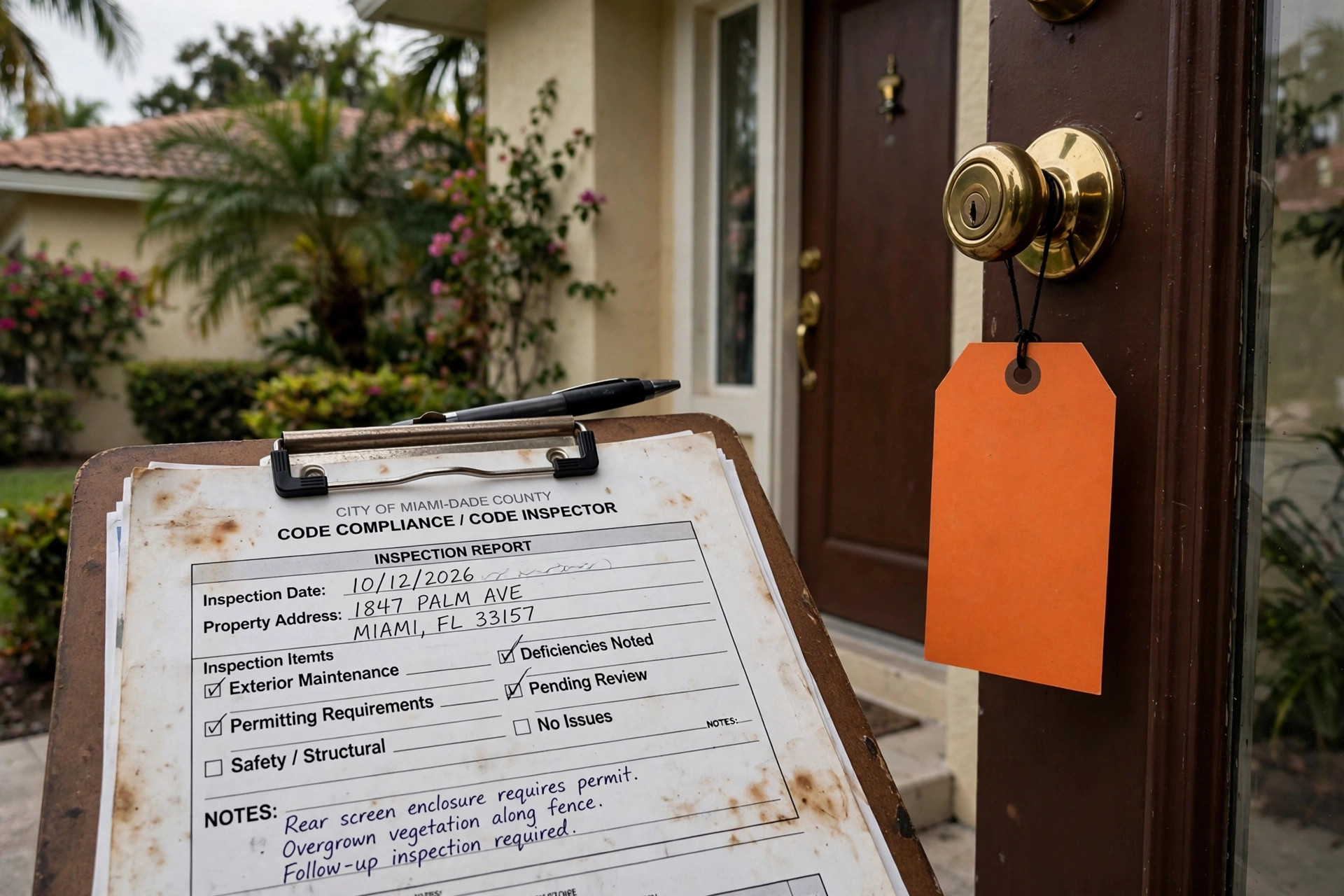
- Code enforcement liens — city or county fines for violations (overgrowth, unpermitted work, unsafe structures) that went unpaid long enough to become liens, sometimes with daily fines behind them. We cover these in depth in selling a house with code violations in Florida.
- Judgment liens — a creditor won a court case and recorded the judgment against you; in Florida it can attach to your real property.
- Mechanics liens — a contractor or supplier who wasn't paid for work or materials on the house.
- IRS and child-support liens — less common, more paperwork, still resolvable at a closing with lead time.
How a lien actually gets cleared at closing
Before any sale, the title company runs a title and lien search. That's how liens surface — including, occasionally, ones the seller didn't know about. For each lien, the title company obtains a payoff figure from whoever holds it: the county, the city, the creditor's attorney. At closing, those amounts are deducted from the proceeds and paid directly to the lienholders, releases get recorded, and the buyer receives clean title. You don't write the checks or make the calls; the settlement statement just shows the deductions, line by line, before you sign.
What if the liens are bigger than the equity?
This is the situation that keeps people stuck, and it has more exits than most realize. Sometimes a payoff is negotiable — old judgment and code liens in particular are occasionally settled for less than the full recorded amount, because the lienholder would rather collect something now than wait indefinitely. Sometimes the math still works because a cash buyer prices the house with the liens in mind and the seller walks away free of the property and the debt spiral, even if the check is small. And sometimes the honest answer is that the numbers don't work yet and the lien needs to be attacked directly — payment plan, fine-reduction hearing, or legal help — before a sale makes sense. We'll tell you which situation you're in, straight.
Why liens scare retail buyers but not us
A regular homebuyer's lender requires clean title and a house that passes appraisal and insurance checks, so liens and the violations behind them kill financed deals — the sale falls apart weeks in, after everyone's spent time and money. A cash buyer has no lender in the picture. We do the same title search, see the same liens, and simply build them into the offer: the liens get paid at closing from the proceeds, exactly as described above. The house's problems become arithmetic instead of obstacles.
If you're behind on payments as well as carrying liens, read our guide to stopping foreclosure — the timelines matter, and liens plus a foreclosure clock is a combination to handle in the right order.
Can a lien be negotiated down?
Sometimes, yes. Not all lienholders are equally rigid. Tax liens are the least flexible — counties expect payment in full, and the amounts are statutory. At the other end, old judgment liens are sometimes settled for a fraction of the recorded amount, because the creditor knows a recorded judgment against a property that never sells may never pay anything at all. Municipal code liens often sit in between: many Florida cities and counties run fine-reduction or amnesty processes, especially when the violations have been cured or a sale will put the property into compliant hands. None of this is guaranteed, and negotiating liens is slow, unglamorous work — but on a house where the lien stack is the whole obstacle, it's work that can be worth thousands per hour spent. A title company or real estate attorney usually makes these calls; in a sale to us, we pursue reductions where they exist because they shape what the deal can pay.
One distinction worth knowing
A lien is different from the debt behind it. Paying off or settling the lien clears the property's title; whether you still owe anything personally afterward depends on the kind of debt and the terms of any settlement. That's another reason lien payoffs belong on a settlement statement drafted by professionals — the paperwork should say, in writing, that the lien is released as to the property, and ideally what remains (usually nothing) as to you.