Step one: what the house is worth fixed up
Everything starts with the after-repair value, or ARV — what your house would realistically sell for, fully renovated, to a regular buyer on the open market. Not the highest price on the street, and not a Zestimate screenshot. A real ARV comes from comparable sales: similar houses, nearby, that actually closed in the last few months, adjusted for size, condition, and features.
This number matters more than any other in the formula, and it's where honest buyers and lowball artists separate. If a buyer won't tell you which comparable sales they used, they're not calculating — they're guessing low and hoping. We pull the same county records and closed sales any agent would, and we'll walk you through them.
Step two: subtract the repairs
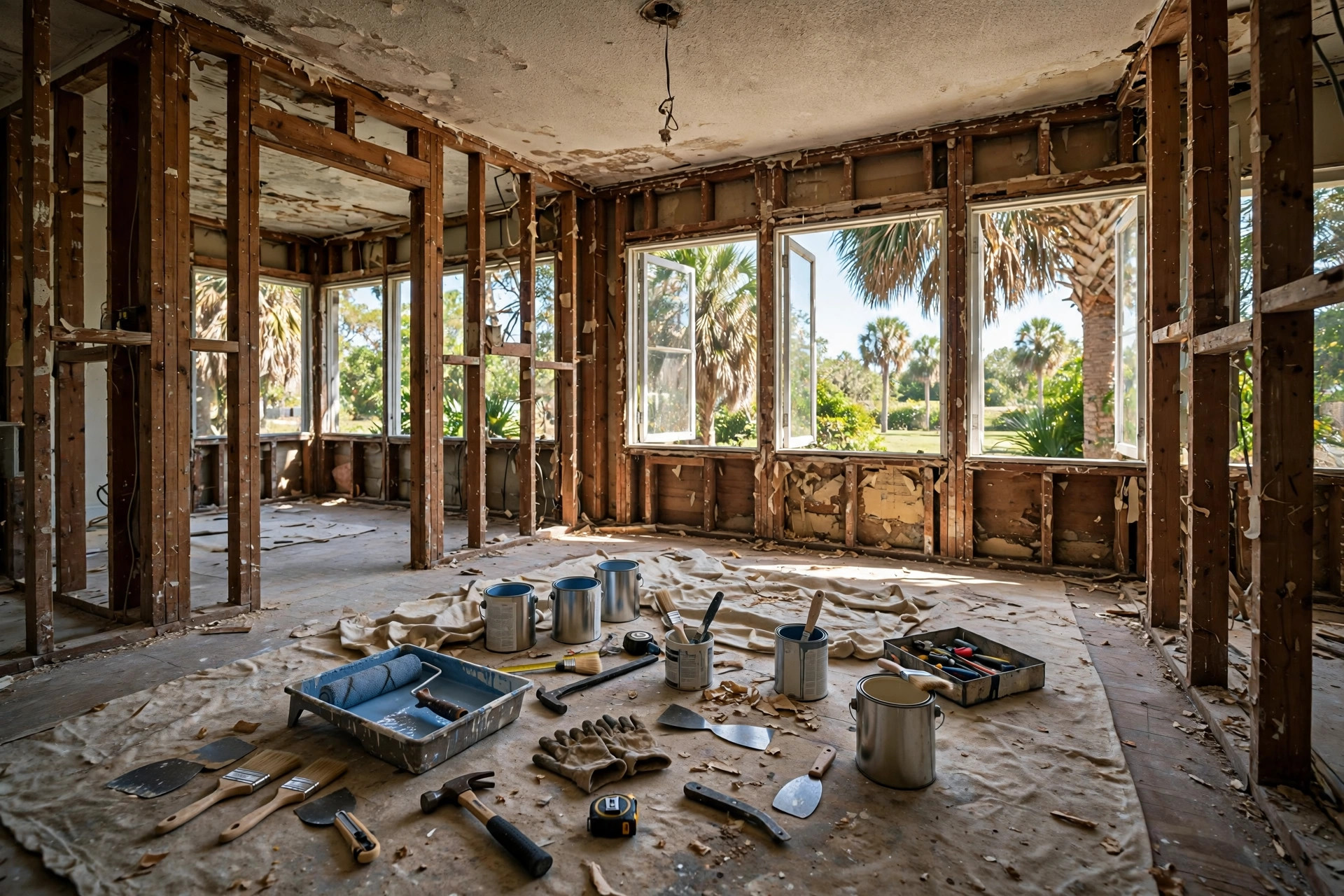
Next comes the cost of getting the house from where it is today to that fixed-up value: roof, kitchen, bathrooms, flooring, electrical, plumbing, AC, permits, and the surprises hiding behind the walls. A buyer who plans to renovate has to price the work at what contractors actually charge in South Florida right now — not at a handyman's weekend rate.
This is the line sellers most often underestimate, because you've lived with the old roof and the 1990s kitchen for years and they work fine for you. They may — but the next buyer's lender, insurer, and appraiser will price them, so the renovation budget has to as well. Our agent vs. cash buyer page shows how repair costs hit a listed sale too, just in a different place.
Step three: subtract holding and selling costs
Buying your house is the start of our expenses, not the end. While we renovate and resell, we're paying insurance (a serious line item in Florida), property taxes, utilities, lawn care, and financing or opportunity costs. Then, when the renovated house sells, we pay commissions and closing costs on that sale just like any seller.
On a typical project these carrying and resale costs add up to roughly 8–12% of the final sale price. That's a real number, and it's one reason a cash offer can never simply be "ARV minus repairs."
Step four: subtract a margin
Last comes the part buyers don't love to say out loud: profit. A cash buyer is running a business and taking the risk that the roof costs more than expected, the market cools mid-renovation, or the house sits longer than planned. The margin is what makes taking that risk rational.
Sellers hear about the "70% rule" — offer equals 70% of ARV minus repairs. It's a rough screening shortcut some investors use, not a law, and plenty of buyers (us included) price deal by deal instead: ARV minus repairs, minus real holding and selling costs, minus a reasonable margin. On a house needing light work, that math often beats the 70% rule in the seller's favor. On a house needing everything, it can land lower. Either way, you should be able to see each line.
A worked example
Say a house in Broward would sell for $480,000 fully renovated. It needs about $65,000 of work — roof, kitchen, two baths, floors. Holding and resale costs run about $45,000. A margin of about $35,000 covers the risk and the business. The offer lands around $335,000.
Notice what that is not: it's not $480,000, and it was never going to be. But also compare it honestly — listing the house as-is usually means the buyer pool shrinks to other investors doing the same math, and listing it renovated means you front the $65,000 and the months yourself. Our breakdown of cash offer vs. listing costs runs that comparison in full.
Why two buyers give you two different numbers
Different buyers use different repair estimates, different ARVs, and different margins — so offers vary, sometimes by a lot. That's normal, and it's exactly why getting two or three offers is smart. What isn't normal is a buyer who can't or won't explain their math. The questions to ask any of us: What ARV did you use, and from which sales? What repair number did you assume? What's in the offer for your costs and profit? A straight buyer answers all three. See how it works for how we put our number together on a call.
How to pressure-test any offer in ten minutes
You don't need our permission or an agent's software to sanity-check a number. First, find three recent closed sales of similar houses within about a mile — public records and the big listing sites show them. That's your ARV neighborhood. Second, get one real repair estimate: even a single contractor walkthrough beats guessing, and for a roof, a roofer's number is gold. Third, redo the subtraction with those figures. If a buyer's offer is far below the result and they can't explain which line differs — a lower ARV, a bigger repair scope — you haven't found a strict buyer, you've found a vague one, and vague is where sellers lose money.
One last honest point: the highest offer isn't always the best offer. A slightly lower number from a buyer with proof of funds, a real earnest deposit, and a short closing window can be worth more than a bigger number attached to contingencies and a shopper who may never close. The formula gets you the number; judgment picks the buyer.