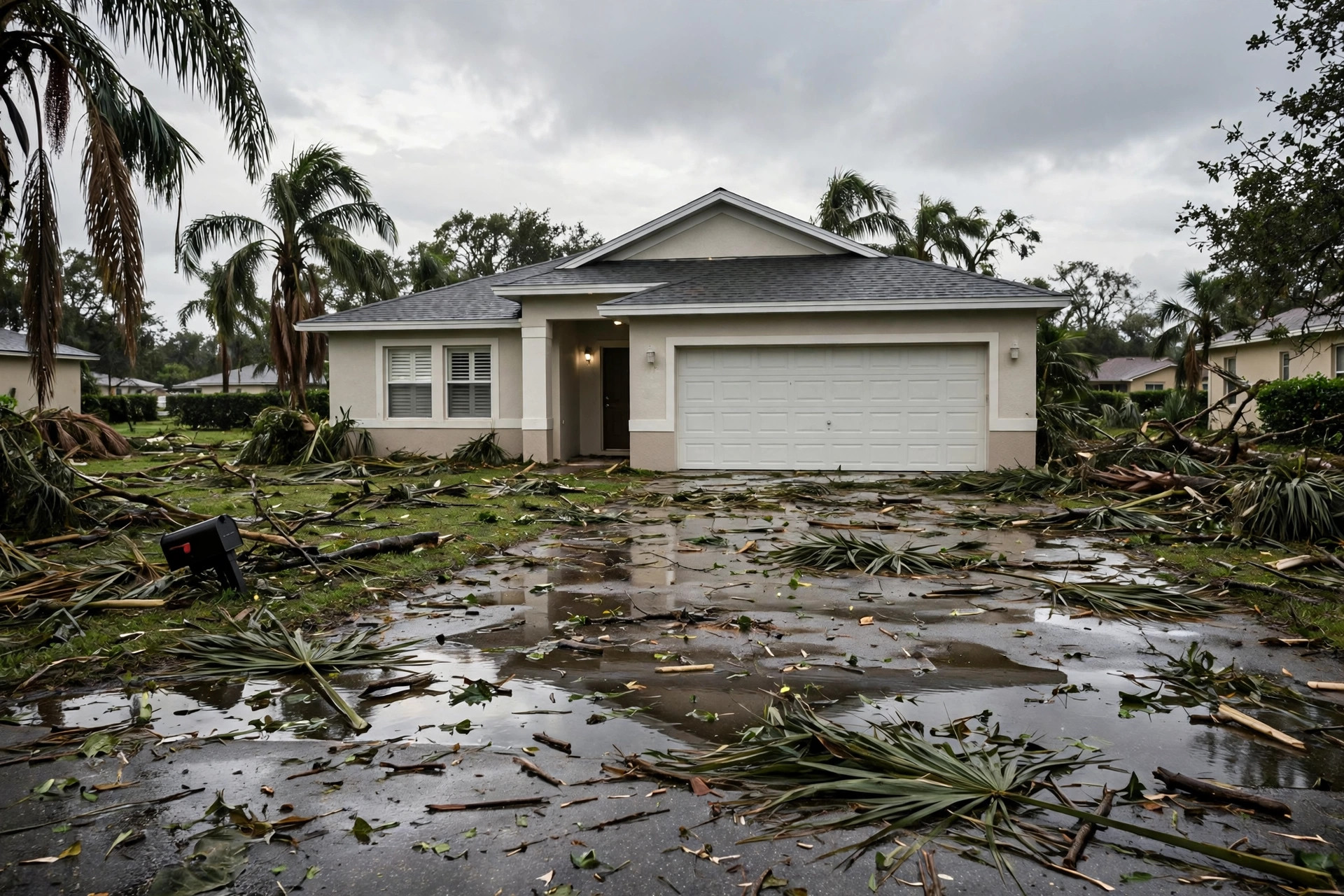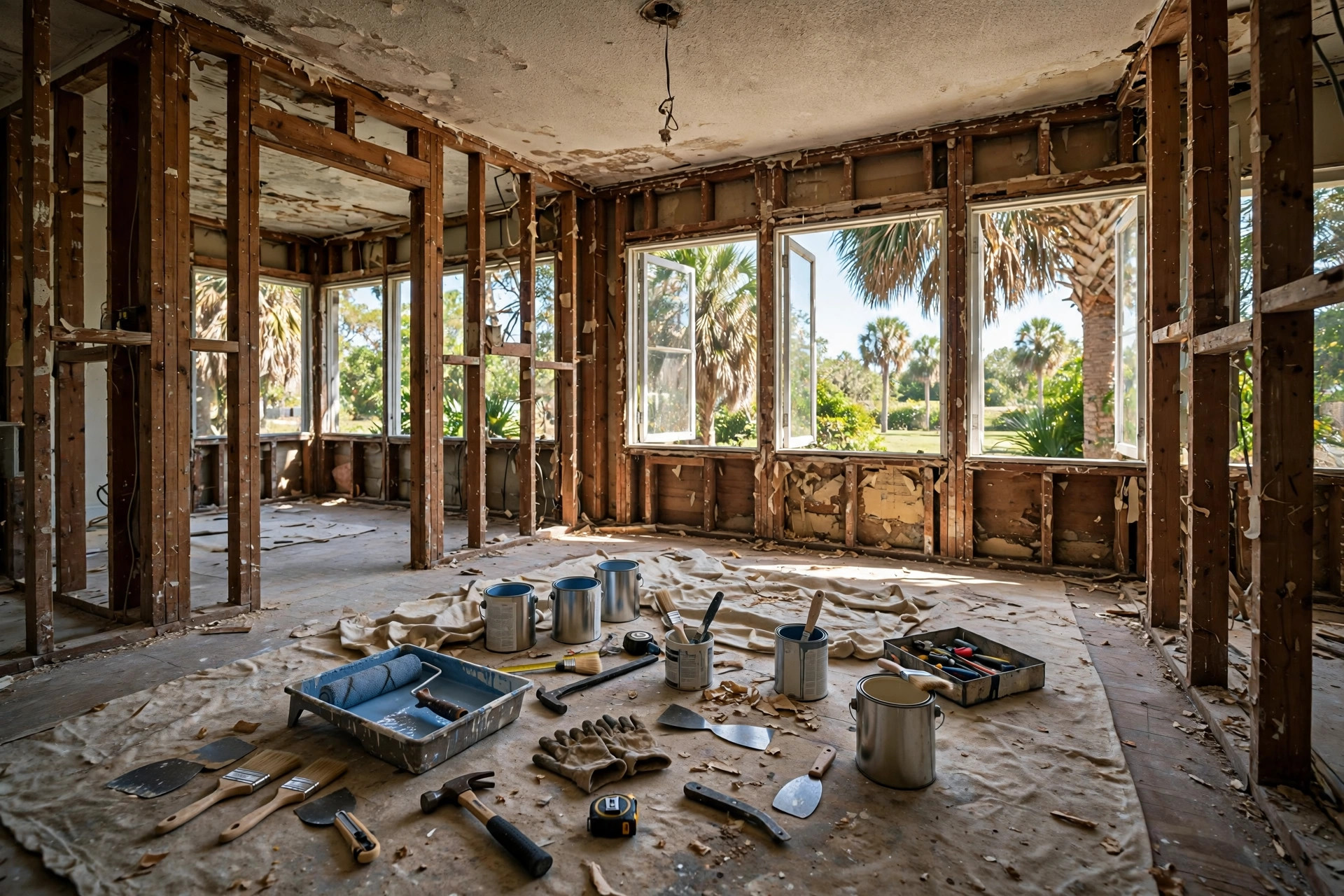
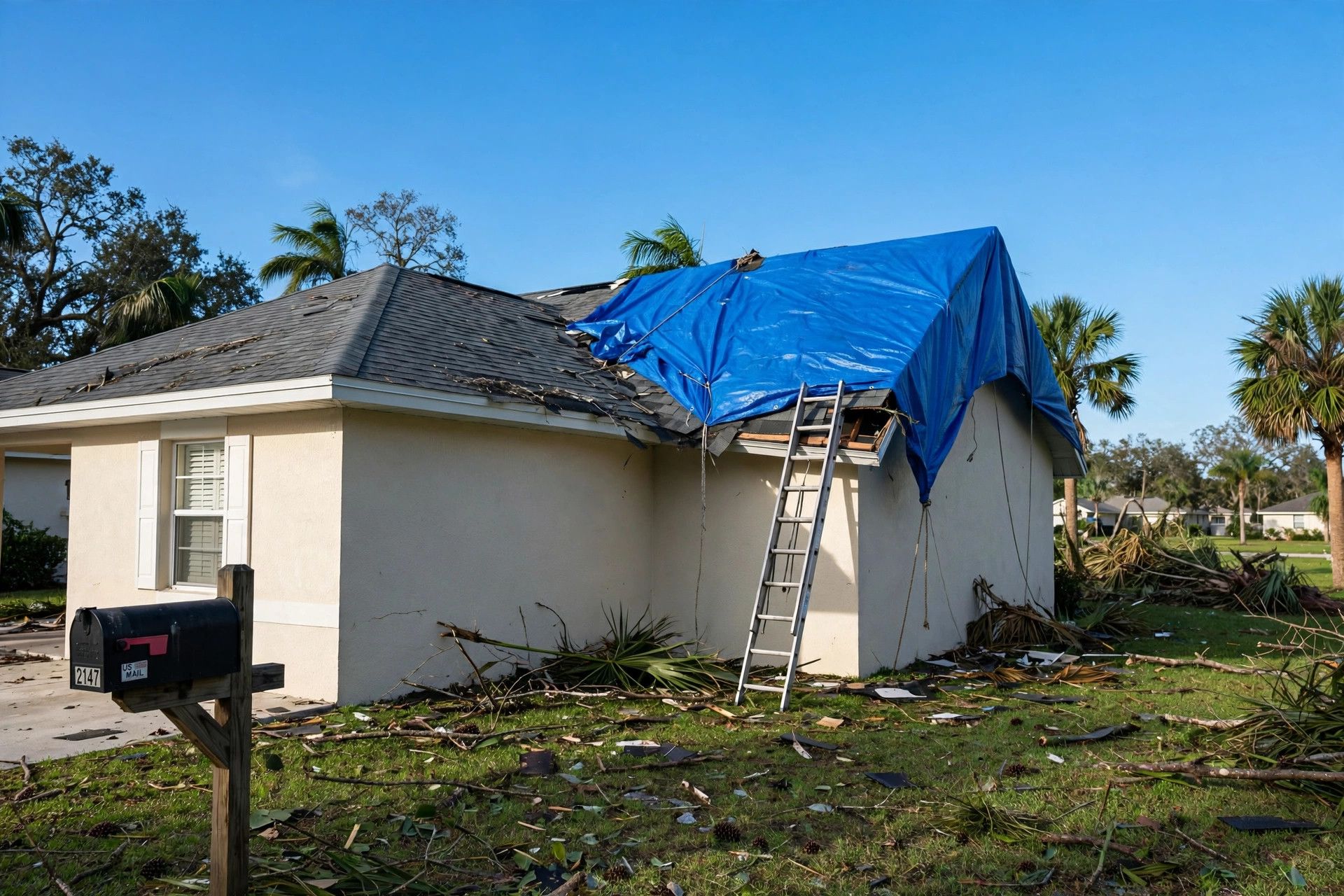
Please note: This article is general information about selling a storm-damaged Florida home. Insurance claims are contract-specific and deadline-driven — your policy and, where needed, a Florida insurance attorney or licensed public adjuster control your claim. Nothing here is legal or insurance advice.
Option one: finish the claim, then decide
The traditional path: document everything, file promptly (Florida policies have strict notice deadlines, and hurricane claims have statutory timelines), get the insurer's scope of loss, repair with the proceeds, then sell a repaired house. Done well, it captures the most value. Done in real life, it often means months of adjuster visits, supplement requests, contractor delays, and a damaged house you're still paying taxes, insurance, and possibly a mortgage on — while living somewhere else. If you have the time, housing stability, and stomach for it, it's a legitimate path. Many storm families simply don't.
Option two: sell as-is with the claim still open
You can sell a damaged house as-is, claim and all — buyers like us price the visible damage and the remaining repair scope into the offer. The key questions to settle before closing, in writing:
- What happens to the claim? Options include closing the claim out before the sale, settling with the insurer and disclosing the outcome, or — in some cases and with insurer and lender awareness — transferring claim rights to the buyer. Each has paperwork and consequences; this is a place for professional guidance, not a handshake.
- Has any claim money already been paid? If your mortgage company is on the check — common, because lenders are named on policies — those funds are usually held in escrow and released for repairs. Money sitting in a loss-draft escrow has to be accounted for in the sale, so tell any buyer about it up front.
- What's disclosed? Florida sellers must disclose known material defects. Storm damage and claim history are exactly the kind of thing to disclose in writing. Honest disclosure protects you after the sale; surprises create lawsuits.
The assignment-of-benefits warning
After every storm, contractors and others appear with clipboards asking you to sign an assignment of benefits (AOB) — a document handing your insurance rights to them. Florida law has tightened significantly around AOBs in recent years, including restrictions on assigning post-loss benefits, precisely because these documents were widely abused. Our plain advice: sign nothing that assigns your benefits in a driveway conversation, ever. If a repair contract is legitimate, it will survive you reading it overnight and having someone you trust review it.
How we price a storm-damaged house
The same formula as any as-is purchase: value after repair, minus the full repair scope (roof, water intrusion, electrical, drywall, mold remediation where present), minus holding costs and margin. We walk the property once, look at the damage with you, and give a number that assumes the claim situation exactly as you describe it — which is why the disclosure conversation above matters. For a Dania Beach-specific look at the repair-vs-sell decision, see storm damage in Dania Beach: repair it or sell it as-is. And the general process, start to finish, is on how it works.
Deadlines and documentation that protect the claim
Whether you sell or not, the claim has its own clock and its own paperwork rules. Notify the insurer as early as possible — Florida law sets outer deadlines for hurricane claim notice, and individual policies are often stricter. Keep a claim file: photos before and after mitigation, every receipt, every email, the adjuster's scope of loss, and notes of phone calls with dates and names. If the insurer issues a payment below your documented damage, Florida provides dispute paths (supplemental claims, appraisal clauses, mediation programs, and counsel) — deadlines again, so treat a lowball letter as a starting gun, not an ending. And if you do sell with the claim open, that file is part of what makes the claim's status verifiable and transferable in an orderly way.
If the claim was denied or you're giving up on it
A denial isn't always the end — denials get revisited with better documentation and professional help — but some owners reach a clear-eyed decision: the house plus its fight is more than they can carry, particularly when they're displaced, dealing with a damaged property from another state, or facing a roof no insurer wants. Selling as-is with a denied or abandoned claim is still entirely possible. The price reflects the full unreimbursed damage, the disclosure reflects the claim's status, and the seller exits both burdens at once. It's not the outcome anyone wanted on the day the storm hit. For some families, it's the outcome that lets life restart — and there's no rule that says the stoic path is the right one.